
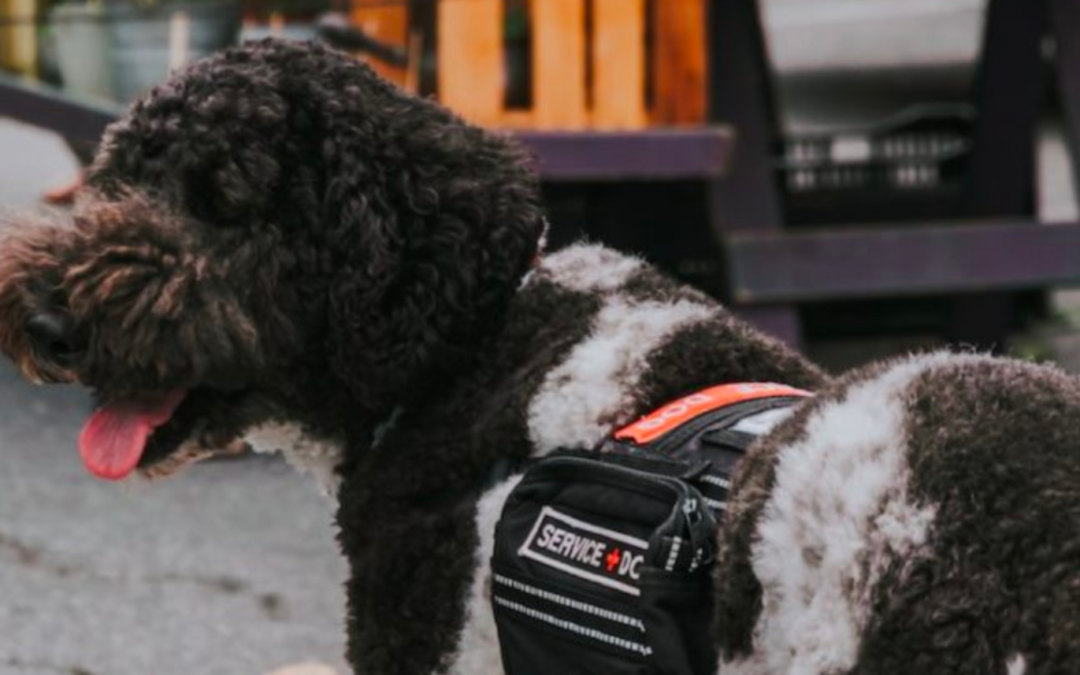
A frequently asked question in search engines and short-term rental forums is whether a vacation rental can deny a service dog. The answer dwells in a gray area of the law.
Am I legally required to allow service dogs in my vacation rental?
The Americans with Disabilities Act requires any “place of public accommodation” to allow service animals. Becoming rentABLE, a site for accessible short-term rentals, explains, “As a lodging provider, the Americans with Disabilities Act (ADA) stipulates that you accommodate guests with disabilities with what’s called ‘reasonable accommodations’ or ‘reasonable modifications.’ So, while you may have a policy which does not allow pets, providing accommodation for a service animal is something you need to do unless doing so would fundamentally alter the nature of your rental or pose a safety threat. ”
Lorraine Woodward, CEO and founder of Becoming rentABLE, says whether or not your vacation rental is pet-friendly or has a no-pet policy, it is important to accept guests with service animals to create an inclusionary guest experience.
The technicalities of whether a short-term rental is a public accommodation are trivial when compared with the importance of your business reputation. And creating an inclusionary environment where all guests – including people with disabilities who depend on a service animal – feel welcome is vital to your business reputation.
What are the service animal policies on Airbnb, Vrbo, and other platforms?
Another incentive to welcome guests with service animals is that major booking sites like Vrbo and Airbnb require it. For example, Vrbo’s policy states: “We’re an inclusive marketplace built on a foundation of trust, safety, and respect. We require all hosts with properties located in countries that have service animal laws to accommodate guests who require a service animal. This applies regardless of a property’s normal house rules pet policy since service animals are not pets.”

What exactly is a service animal?
Service animals are not pets; they are workers trained to perform certain tasks. Those tasks include assisting people with disabilities in performing everyday tasks such as walking, alerting of an impending seizure or low blood sugar, or making sure someone with a severe mental illness takes their medicine, according to Becoming rentABLE.
Service animals include psychiatric service dogs, which are sometimes erroneously confused with “therapy” or “emotional support” animals.
A psychiatric service dog is a type of service animal trained to assist those with mental illnesses that interfere with their daily lives – such as post-traumatic stress disorder, schizophrenia, depression, anxiety, and bipolar disorder. A psychiatric service dog, for example, could help someone with severe anxiety by bringing medication during an anxiety attack or bringing help in a crisis.
What’s the difference between psychiatric service animals and emotional support animals?
Emotional support dogs are commonly mistaken for psychiatric service dogs. Unlike a service animal, an emotional support animal isn’t trained to perform specific tasks. The emotional support animal’s purpose is simply to help relieve psychological or emotional symptoms the owner may be experiencing.
Because they are not service animals, emotional support and therapy animals are not protected by federal law, and you are not required to host them if you have a no-pet policy.
How can I accommodate guests with service animals?
That said, there are limitations on what you can ask a guest concerning a service animal. You are prohibited from asking what the disability is or asking for proof that the animal is a service animal. Also keep in mind that service animals are not required to wear identification like a vest, tag, or harness.
There are, however, two questions you can ask when a guest says they plan to bring their service animal, according to the Americans with Disabilities Act:
- Is the service animal required because of a disability?
- What work or task is the service animal trained to do?
While staying in your vacation rental, the owner of the service animal is responsible for the care and supervision of the animal, including toileting, grooming, feeding, watering, and providing access to veterinary care, according to Becoming rentABLE. Your rental agreement should state clearly that the service animal may not be left at the home unattended, Woodward says
The owner of the service animal is responsible for any damage the animal causes to the property.
However, federal law prohibits you from charging an extra cleaning fee for a service animal. You may not restrict the service animal to certain parts of the rental property.
You may ask a guest with a disability to remove their service animal from your property if the animal is not housebroken or if the guest cannot control it.

Do I need special animal liability insurance for my short-term rental?
With the presence of animals comes liability. Even if you have a no-pet policy, it’s best to buy an insurance plan that covers animal bites.
Nick Massey, director of sales at Proper Insurance, said an owner of an STR can be named in a lawsuit if a guest’s pet or service animal bites someone.
Insurers paid out $1.136 million in dog bite liability claims in 2022, according to the Insurance Information Institute.
A claim for a bite by an animal that doesn’t belong to the STR owner falls under what is called “Vicarious Liability,” which means you may not be directly liable (you don’t own the dog in this case) but you can still be held liable because you let someone stay at your home as a guest and they had a “vicious” animal on site that you allowed, Massey said.
Supplemental companies that sell by-the-night liability coverage generally do not cover animal/pet liability.
Safely, for instance, discloses right on their website that they exclude dog bites.
Most homeowners and landlord insurance policies have limitations on animal liability, such as excluding many breeds of dogs from coverage.
“The best answer is to make sure your insurance doesn’t have these limitations at all as you never know who is staying at your property,” Massey said. “Given emotional support animals, service animals, guests who might sneak a pet, you should be prepared as host for the unknown and have a solid insurance policy to back that up.”
Look for a commercial general business liability policy that extends off-premise and has no animal exclusions or limitations, Massey said.
How do I clean a no-pet short-term rental after a service animal stay?
Regardless of whether you have a pet-friendly property or a no-pet policy, you might encounter guests with dog or cat dander allergies directly after hosting a guest with a service animal or pet.
Brindley Beach Vacations in Outer Banks, North Carolina, specializes in pet-friendly properties. Yet, the vacation rental property management company hosts someone with a pet allergy at least every week, said James Skinner, Brindley Beach Vacations housekeeping manager.
In those instances, the housekeeping crew takes extra cleaning measures to ensure the unit will be a safe environment for a guest with pet allergies.
Here is Skinner’s cleaning checklist for those instances:
1. Disinfect the unit
2. Switch out and launder comforters
3. Have carpets and upholstery professionally cleaned
4. Do a mini spring cleaning:
- Sanitize major touchpoints like door knobs, light switches, hand railings, remote controls, and chair backs
- Clean mini blinds by washing them with a water and detergent solution
- Wash sliding glass doors inside and out
- Clean metal door thresholds with a scrub brush and detergent solution
- Sweep, vacuum, and damp-wipe all baseboards
- Vacuum or lightly brush lampshades
- Vacuum vent covers, damp clean, and dry
- Dust and clean televisions and other electronics
- Vacuum sliding door tracks to remove loose debris; then wash with a detergent solution and scrub brush or soap pad
- Damp wipe all window and door frames and window sills with Murphy’s Oil
5. Change out all air-conditioning filters